Link 01
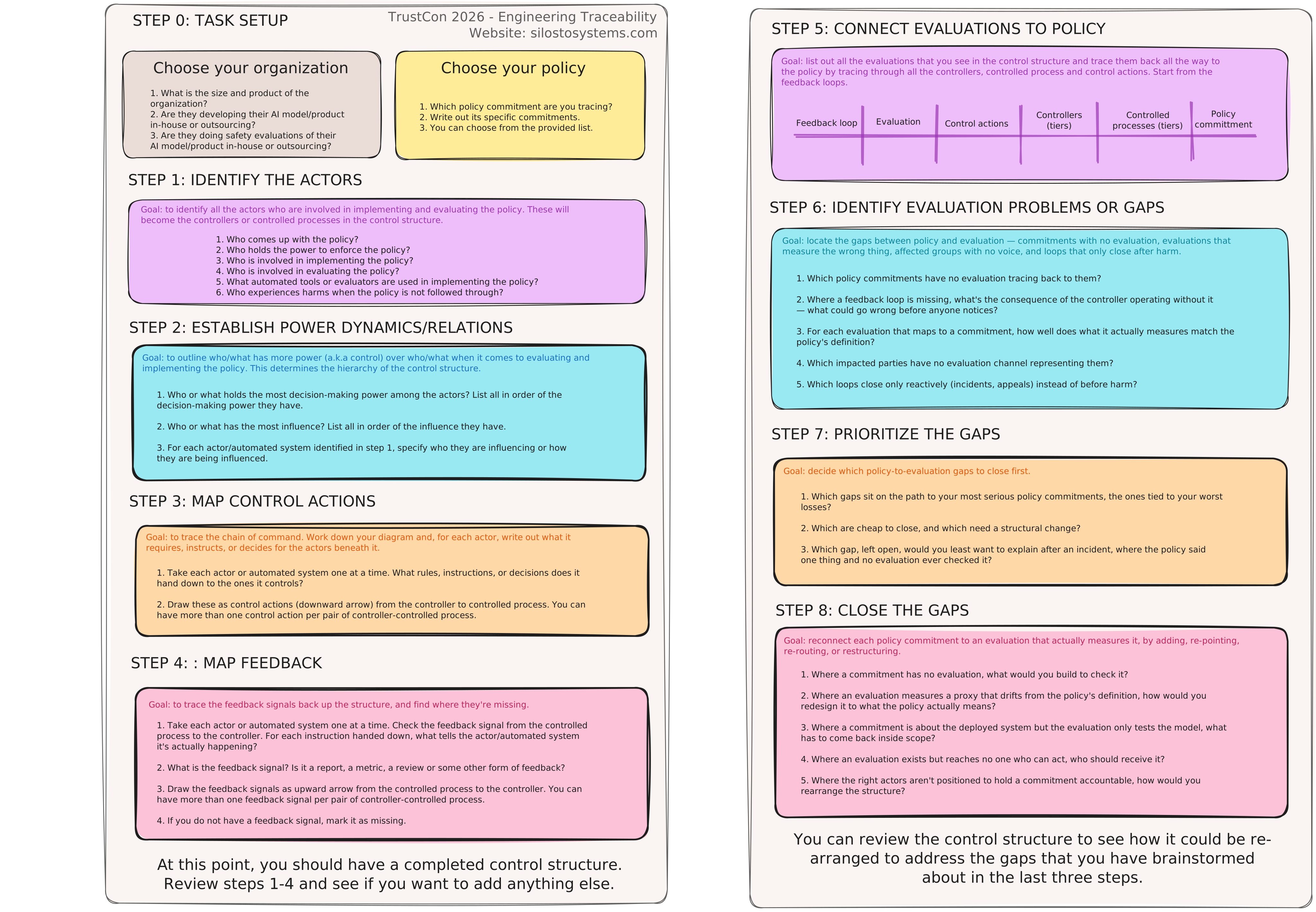
Workshop worksheet · 8 steps
From policy commitment to closed gaps
Steps 1–4 (Activity 1) build the control structure. Steps 5–8 (Activity 2) trace evaluations back to policy, name the gaps, prioritize them, and propose closures.
Worksheet map · all 8 steps
 Open full image in a new tab ↗
The fields below mirror the same eight steps.
Step 0
Task setup
Choose your organization
Choose your policy
Step 1
Identify the actors
Goal
Identify all the actors who are involved in implementing and evaluating the policy. These will become the controllers or controlled processes in the control structure.
- Who comes up with the policy?
- Who holds the power to enforce the policy?
- Who is involved in implementing the policy?
- Who is involved in evaluating the policy?
- What automated tools or evaluators are used in implementing the policy?
- Who experiences harms when the policy is not followed through?
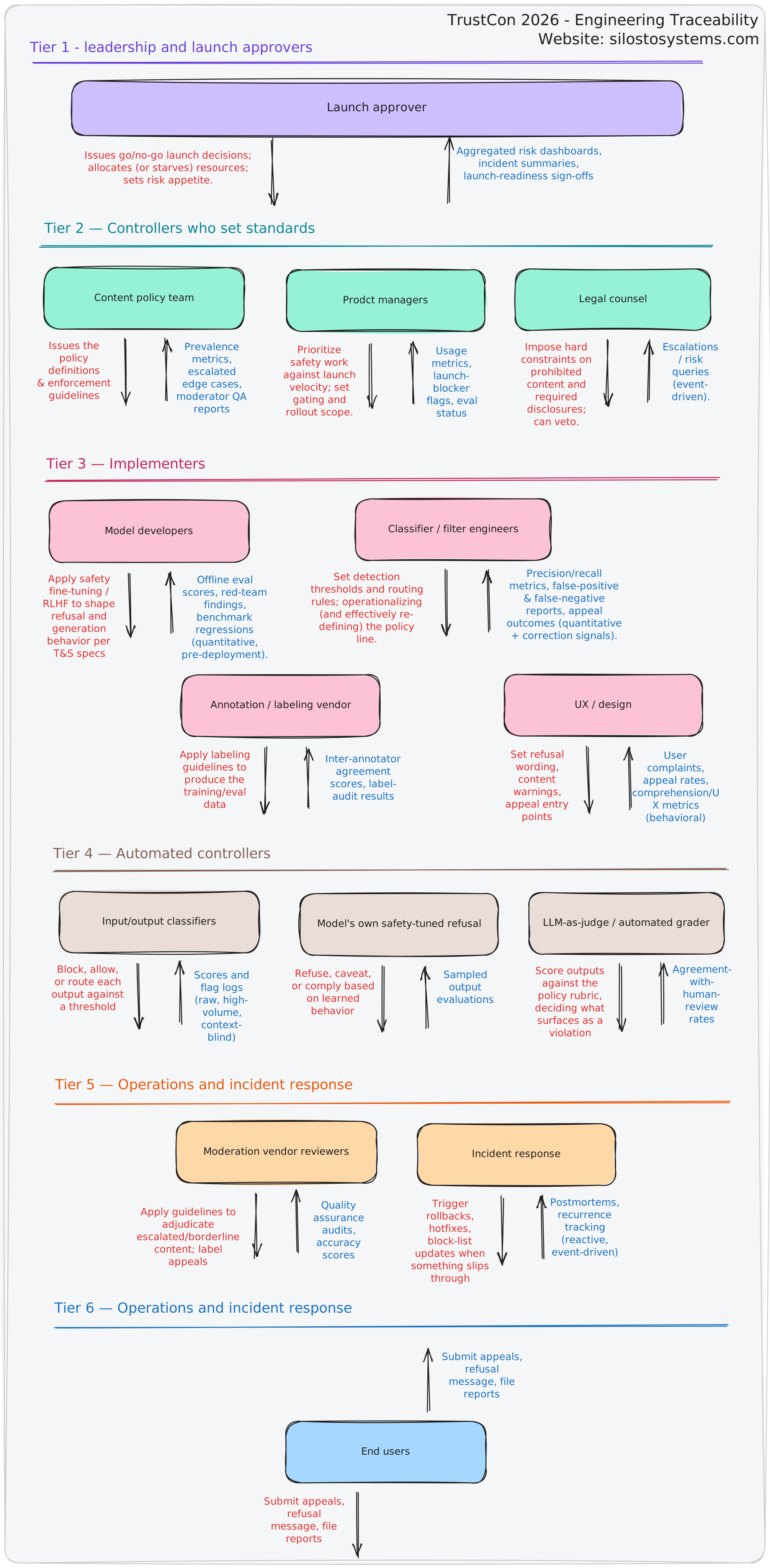
Reference · example controller tiers
 Open full image in a new tab ↗
Use this as a prompt, not a template — your group’s policy and organization will have different actors and tiers.
#01
#02
#03
#04
#05
Step 2
Establish power dynamics / relations
Goal
Outline who/what has more power (a.k.a. control) over whom when it comes to evaluating and implementing the policy. This determines the hierarchy of the control structure.
- Rank actors by decision-making power (tier 1 = most, higher tier = less).
- Rank actors by influence — sometimes different from formal power.
- For each actor, note who they are influencing or how they are being influenced.
Adjust the tier field to place each actor in the hierarchy. The list below is sorted top-down by tier.
(unnamed)
(unnamed)
(unnamed)
(unnamed)
(unnamed)
Steps 3 & 4
Map control actions & feedback
Goal
Step 3 — Control actions: trace the chain of command. For each pair of actors, name the rules, instructions, or decisions the upper hands down.
Step 4 — Feedback: for each downward arrow, trace what signal comes back — report, metric, review, or nothing. Mark missing feedback.
Step 5
Connect evaluations to policy
Goal
List all the evaluations you see in the control structure and trace them back to the policy by walking through the controllers, controlled process, and control actions. Start from the feedback loops.
Evaluation trace 01
Steps 6 – 8
Identify, prioritize & close gaps
Goal
Step 6 — Identify: locate gaps between policy and evaluation. Step 7 — Prioritize: decide which to close first. Step 8 — Close: propose what would reconnect each commitment to an evaluation that actually measures it — and name the research question or tool required.
Gap-hunting prompts
- Which policy commitments have no evaluation tracing back to them?
- Where a feedback loop is missing, what could go wrong before anyone notices?
- For each evaluation mapped to a commitment, how well does what it measures match the policy's definition?
- Which impacted parties have no evaluation channel representing them?
- Which loops close only reactively (incidents, appeals) instead of before harm?
Gap 01